

Introduction
Steel fabrication is entering an exciting era, fueled by technological innovations that are transforming how the industry operates. From automation to AI, steel fabricators are embracing new technologies to enhance productivity, precision, and sustainability. In this blog post, we’ll explore the technological advancements that are shaping the future of steel fabrication.

1. Automation and Robotics in Steel Fabrication:
Automation is no longer a distant dream; it’s actively revolutionizing the steel fabrication industry. Robots are increasingly being used for tasks that require precision and repetition, such as cutting, welding, and assembly. These robots are guided by computer-aided design (CAD) models to ensure that every component is manufactured with pinpoint accuracy.
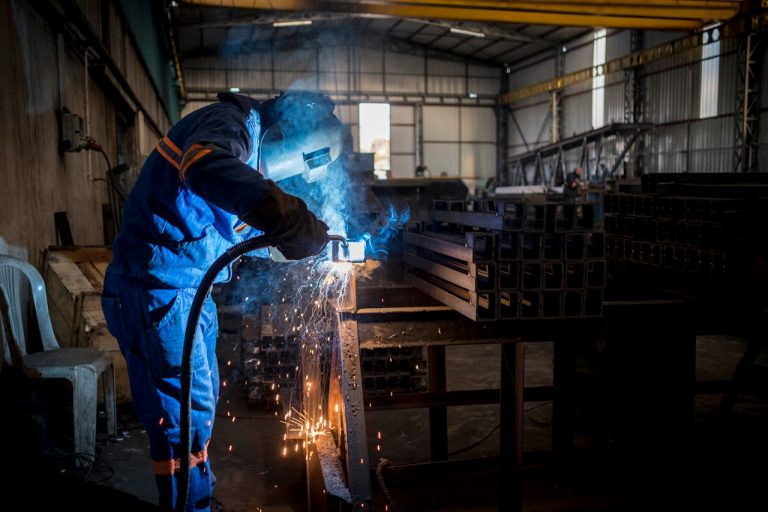
Robotics reduces the margin for error and ensures that projects are completed faster, all while maintaining quality standards. For example, automated welding systems can perform continuous welding on large steel components without breaks, resulting in seamless joints and stronger structures. This level of precision is difficult to achieve with manual welding, making robots indispensable in high-volume fabrication projects.
2. The Rise of 3D Printing in Metal Fabrication:
One of the most transformative technologies in steel fabrication is additive manufacturing, commonly known as 3D printing. While still in its early stages for large-scale production, 3D printing allows fabricators to create intricate steel components layer by layer, which would be difficult or impossible using traditional methods.
3D printing reduces material waste by only using the exact amount of steel required to produce a part, making it an efficient and eco-friendly manufacturing method. Additionally, 3D-printed steel components can be highly customized, offering endless possibilities for complex architectural designs, aerospace parts, and even automotive components.
At MCL Steel, we are closely following the developments in additive manufacturing, and we foresee that 3D printing will open up new avenues for creativity and innovation in steel fabrication.
3. Artificial Intelligence (AI) and Predictive Maintenance:
Artificial Intelligence (AI) is playing a significant role in steel fabrication, particularly in predictive maintenance and quality control. AI-powered systems can monitor the performance of machinery in real-time, identifying potential issues before they lead to costly breakdowns. This ensures continuous production and reduces downtime, saving both time and money.
Furthermore, AI is used to improve quality assurance in steel fabrication. For example, AI-driven image recognition software can detect even the smallest imperfections in steel components, ensuring that they meet strict quality standards before leaving the factory. This level of quality control enhances customer satisfaction by delivering flawless products.
4. Sustainability Through Innovation:
Many of the technological advancements in steel fabrication are aimed at making the industry more sustainable. From reducing energy consumption through automation to minimizing material waste with 3D printing, these technologies are helping steel fabricators meet the growing demand for eco-friendly practices.
Conclusion
At MCL Steel, we are committed to adopting these innovations to ensure that our processes are as efficient and sustainable as possible. We believe that technology will continue to drive the steel fabrication industry toward a greener and more prosperous future.